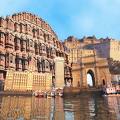
 Around 24km southwest of Mandi, the sacred lake of Rewalsar is revered by Buddhists, Hindus and Sikhs. The Indian monk Padmasambhava departed from Rewalsar in the 8th century AD to spread Buddhism to Tibet, and Hindus, Buddhists and Sikhs came together here in the 17th century to plan their resistance against ethnic cleansing by the Mughals.
Category: Himachal Pradesh
 Rekong Peo is the main administrative centre for Kinnaur and an important transport hub, but there’s little to delay the traveller for longer than it takes to arrange the permit for onward travel to Tabo in Spiti. A steep walk above town near the radio mast is the Kinnaur Kalachakra Celestial Palace (Mahabodhi Gompa), with a 10m-high statue of Sakyamuni and great views across to Kinner Kailash. For a longer stay, take the bus uphill to Kalpa.
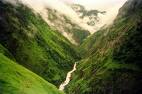 The gateway to Kinnaur, this nondescript town was once the capital of the Bushahr rajas. Today, Rampur is mainly a place to change buses or break the journey from Shimla to Rekong Peo. Many drunk truck drivers stop here overnight, creating quite a threatening atmosphere, particularly for single women. Most places to stay are below the bus stand, in the bazaar that cascades downhill from the highway.
 Running south from the Spiti Valley, the wind-scoured Pin Valley National Park (1875 sq km) is famous as the ‘land of ibex and snow leopards’, though sightings of either species are rare. From July to October, a popular eight-day trek runs from here over the 5319m Pin-Parvati Pass to the Parvati Valley near Kullu.
 Running northeast from Bhuntar towards Lahaul and Spiti, the Parvati Valley is a well-established traveller hangout. Several small towns along the valley have been transformed into hippie resorts, offering cheap accommodation, international food and a nonstop reggae soundtrack to crowds of dreadlocked and taffeta-skirted travellers. The attractions of the valley are peaceful scenery, the hot springs at Manikaran and a plentiful supply of wild charas (marijuana), with all the risks that this entails. There are some excellent treks in the area, but solo trekking is not recommended.
 Centred on imposing Naggar Castle, the slumbering village of Naggar was the capital of Kullu for 1500 years. The Russian painter Nikolai Roerich set up home here in the early 20th century, ensuring a steady stream of Russian tourists. The village lies on the back road between Kullu and Manali but everything of interest is around the castle, 2km uphill. You can check your email at several small net-cafés for Rs 60 per hour. The owners of the Poonam Mountain Lodge can arrange treks into the hills.
 Around 4km above Dharamsala, or 10km via the main road, McLeod Ganj is the headquarters of the Tibetan government in exile and the residence of His Holiness the 14th Dalai Lama. It’s also the main traveller hangout in Himachal Pradesh, with dozens of budget hotels, trekking companies, net cafés, traveller restaurants, video movie parlours and wall-to-wall shops selling Tibetan souvenirs.
 Manikaran means ‘Jewel from the Ear’, and according to local legend, a giant snake stole earrings from Parvati while she was bathing, then snorted them out into the ground releasing the hot springs bubbling beneath. The water emerging from the ground is hot enough to boil rice and it has to be cooled with river water for bathing. Locals claim it can cure everything from rheumatism to bronchitis.
 Formerly a trading stop on the salt route to Tibet, Mandi is the gateway to the Kullu Valley and the junction of the main roads from Kullu, Chandigarh and Pathankot. The town feels more Punjabi than Himalayan, with a large Sikh community and a sticky air reminiscent of the plains. Sprawling around the confluence of the Beas River and the Suketi Khad stream, the town is dotted with ancient Shaivite temples – at least 81 according to official figures – and you can do a day trip into the hills to visit the holy lakes at Rewalsar and Prashar.
 The surrounding mountain scenery lures tourists to Manali year-round. Domestic tourists come here for honeymoons and mountain views, while foreigners come for adventure sports or, more commonly, to hang out in the hippie villages around the main town. Until the 1960s there was nothing here but a few old stone houses and temples, but modern Manali is crammed with concrete hotels and the town is in severe need of some town planning – stay in the villages of Vashisht or Old Manali for a more peaceful mood.