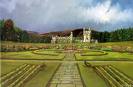
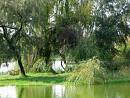
Built in 1751, the charming Elizabethan manor of Trerice (NT; 01637-875404; admission £6; 11am-5pm Sun-Fri Mar-Oct, gardens from 10.30am) is famous for the elaborate barrel-roofed ceiling of the Great Chamber, but has plenty of other intriguing features, including ornate fireplaces, original plasterwork and a fine collection of period furniture. There’s also an amusing lawnmower museum in the barn, with over 100 grass-cutters going back over a century.
Category: SOUTHWEST ENGLAND
Bournemouth

Sprawling for seven miles along the southern Dorset coastline, Bournemouth is one of the largest seaside resorts in Britain, famous for its grand seafront and broad sandy beaches. It’s a place with a rather strange split personality; part faded Victorian resort, part corporate anytown and part mass-market tourist holiday park, where wrinkly day-trippers and holidaying coach parties rub shoulders with stag parties, boozed-up clubbers and conference delegates. Still, it’s an atmospheric introduction to the befuddling world of the British beach holiday, and there are plenty of things to keep you occupied: sunbathing, shopping and water sports by day, and a wealth of bars, clubs and dodgy variety shows to explore by night.
Ilfracombe

Strung out along a grand seafront promenade backed by a string of Edwardian villas and budget B&Bs, the coastal town of Ilfracombe has been attracting tourists since before Queen Victoria was on the throne, and it’s still a favourite destination for holidaying Brits looking for a spot of bracing sea air and summer sunshine. Chic it certainly isn’t, but Ilfracombe makes an attractive spot to sample the peculiar charms of the British seaside – candy-floss, cloudy days, chip wrappers and all. There are small beaches beyond the grassy headland of Hillsborough, but the best sand is 5 miles west at Woolacombe; the little cove of Lee Bay around the headland is also worth seeking out.
Princetown

Perched on a bleak rise of moorland 8 miles east of Tavistock, Princetown is England’s highest town, but it’s best known as the location of one of Britain’s most infamous high-security prisons. The gloomy granite form of Dartmoor Prison, built in 1809 to house French and American prisoners of war, looms ominously over the northern edge of town. It’s far from the most beautiful spot on Dartmoor, but Princetown’s central location makes it a good base for walking.
Truro

Cornwall’s capital city has been at the centre of the county’s fortunes for over eight centuries. Truro grew up around a hilltop castle (no longer standing) built by Richard Lucy, a minister of Henry II’s, but it was the town’s position at the confluence of the Rivers Allen, Kenwyn and Truro that sealed its fortunes (the town’s name is thought to derive from the Cornish word tri-veru, meaning three rivers). Throughout the Middle Ages, Truro was one of five Stannary towns in Cornwall, where the county’s tin and copper was assayed and stamped. During the 18th and 19th centuries, it became one of the southwest’s most important industrial towns, attracting an influx of wealthy merchants and the construction of a swathe of elegant townhouses, best seen along Lemon St and Falmouth Rd. Truro was granted its own bishop in 1877, and the city’s three-spired cathedral followed soon after – finally completed in 1910, it was the first new cathedral in England since St Paul’s. Today, little evidence remains of Truro’s industrial heyday, but the city still makes a good base, with a selection of shops, galleries and restaurants and Cornwall’s main museum.
Braunton And Croyde

Croyde Bay and the nearby beach at Saunton Sands are Devon’s most popular surfing spots, with a clutch of good camp sites, B&Bs and pubs. Check out the Croyde Surf Club website (www.croydesurfclub.com) for webcam shots from all the area’s main breaks.
Isles Of Scilly

It’s not quite true to say that Land’s End is the most westerly point of the British Isles; that claim truly belongs to the tiny Isles of Scilly, 28 miles southwest of mainland Cornwall. Over 140 islands make up this min-iature archipelago, but only five are inhabited; St Mary’s is the largest and busiest island, closely followed by Tresco, while only a few hardy souls remain on Bryher, St Martin’s and St Agnes. Nurtured by the Gulf Stream and blessed with a balmy subtropical climate, the Scillys have long survived on the traditional industries of farming, fishing and flower-growing, but these days tourism is by far the biggest money-spinner. With a laid-back island lifestyle, a strong community spirit and some of the most glorious beaches anywhere in England, it’s hardly surprising that many visitors find themselves drawn back to the Scillys year after year. While life moves on at breakneck speed in the outside world, time in the Scillys just seems happy to stand still.
Salisbury

Centred around a majestic cathedral topped by a soaring central spire – the tallest in England – the gracious city of Salisbury makes a charming place from which to explore the rest of Wiltshire. It’s been an important provincial city for more than a thousand years, and its streets are dusted with buildings from almost every period in Britain’s architectural history – medieval walls, half-timbered Tudor townhouses, Georgian mansions and Victorian villas – but Salisbury is a modern, lively place, with plenty of bars, restaurants and terraced cafés, as well as a concentrated cluster of excellent museums.
Wareham And Around

Saxons established the sturdy settlement of Wareham on the banks of the River Frome in around the 10th century, and the remains of their defensive walls can still be seen encircling the town. St Martin’s Church dates from around the same period, and is one of the last remaining Saxon churches in Dorset. The town is also well known for its connections to the enigmatic figure of TE Lawrence, immortalised in David Lean’s epic Lawrence of Arabia.
Bristol

For years gritty, grimy old Bristol has been the ugly sister of Britain’s cities, outclassed by Bath, outsmarted by London and upstaged by the rejuvenated cities of Newcastle and Manchester to the north. But the fortunes of this old industrial city have changed dramatically in recent years, and the transformation that’s taken place over the last decade is pretty astonishing. There’s a new sense of swagger and self-belief around Bristol these days; while the once-great trades of shipbuilding, manufacturing and the railways have long since sailed upriver, the city has steadily reclaimed its rightful place as an economic powerhouse, gastronomic centre and a cultural force to be reckoned with. The crumbling docks have been prettified and polished up; the streets are packed with cutting-edge restaurants, designer bars and world-class museums; and the city’s music, media and nightlife scenes are all showing the rest of the country how things should be done. It’s real, raw and just a little rough around the edges, but if you really want to know exactly where Britain’s at right now, then Bristol is hard to beat.