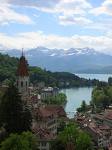
Ask any visitor for their ideal image of an English city, and chances are they’ll come up with something pretty close to Bath – an architectural icon, cultural trendsetter and fashionable haunt for the cream of British society for the last 300 years. With its grand Georgian terraces, Palladian parades and lofty townhouses of honey-coloured stone, it’s certainly one of Britain’s most attractive cities, and still exudes an air of gentility and chi-chi sophistication – in fact, Bath boasts more listed buildings than almost anywhere else in the country, and houses here change hands for truly eye-popping sums. The whole city has been named a World Heritage Site by Unesco, and it’s blessed with a wealth of architectural wonders, including the glorious Royal Cres and one of the world’s finest Roman spas. But it’s not without its problems: the hills are knackering, the bars are snooty, the hotels are expensive, and the rush hour traffic will have you weeping into your steering wheel, but despite all the niggles, it’s impossible not to fall in love with this finely wrought jewel in England’s crown.
Category: SOUTHWEST ENGLAND
Falmouth

The maritime port of Falmouth sits on the county’s south coast at the end of the Carrick Roads, a huge river estuary that empties out into the third deepest natural harbour in the world. Falmouth’s fortunes were made during the 18th and 19th centuries, when clippers, trading vessels and mail packets from across the world stopped off to unload their cargoes in the town, and Falmouth remains an important centre for shipbuilding and repairs. These days, however, it’s better known for its lively nightlife and the newly-built campus of the CUC (Combined Universities of Cornwall), a few miles up the road in Penryn; although salty seadogs can still get a taste of the town’s nautical heritage at the stunning National Maritime Museum beside the harbour.
Poole

Exactly where Poole begins and Bournemouth ends is hard to tell, as the towns’ outskirts simply merge together as you move west along the coastline; but it doesn’t take long to realise Poole is an altogether more attractive place than its brash, busy sister just along the bay. The town has grown up around its pretty old harbour, which was once busy with fishing boats and trading vessels, and now bustles with designer yachts and cruise boats heading to the offshore islands around the bay. The quay area is dotted with restaurants and salty old pubs, and the Sandbanks area has an excellent beach and is a popular centre for water sports.
Torquay And Paignton

If you thought the British seaside holiday was dead, then think again; it’s alive and well along the stretch of coastline between Torquay, Paignton and Brixham collectively known as the English Riviera. Despite the name (and the best efforts of the South Devon Tourist Board to convince us otherwise), this is a long way from St Tropez, but the region does have its peculiar charms – especially if you’ve got a soft spot for amusement arcades, deckchairs and good old-fashioned fish and chips. Queen of the coastline is grand old Torquay, where the Victorian villas and chintzy hotels are stacked up like dominoes above the bay. Just to the west of Torquay is Paignton, the picture of an English seaside resort, complete with a seafront promenade, multicoloured beach-huts and a faded 19th-century pier.
Bodmin Moor

Cornwall’s ‘roof’ is a high heath pockmarked with bogs and granite hills, including Rough Tor (pronounced row-tor, 400m) and Brown Willy (419m), Cornwall’s highest point. It’s a desolate place that works on the imagination; the Beast of Bodmin, a large black catlike creature, has been seen regularly for many years, although no-one’s ever managed to snap a decent picture.
Fowey

Nestled on the steep tree-covered hillside overlooking the River Fowey, opposite the old fishing harbour of Polruan, Fowey (pronounced Foy) is a pretty tangle of pale-shaded houses and snaking lanes. It has a long maritime history, and in the 14th century raids on French and Spanish coastal towns were conducted from here. To defend the town against Spanish raids, Henry VIII constructed St Catherine’s Castle (EH; admission free), above Readymoney Beach, south of town. The town later prospered by shipping china clay, quarried at the clay pits around St Austell, but the industrial trade has long disappeared and Fowey has now reinvented itself for summertime tourists and second homeowners.
Porlock And Around

The small village of Porlock is one of the prettiest on the north Exmoor coast, with a huddle of thatched cottages running along its main street all the way to the picturesque breakwater of Porlock Weir, 2 miles to the west. Coleridge’s famous poem Kubla Khan was written during a brief sojourn in Porlock (helped along by a healthy slug of laudanum and a vicious head cold), and the village is still a popular stop-off for summertime tourists, as well as walkers on the Coleridge Way and the South West Coast Path.
Totnes

The delightful little town of Totnes has been something of a hippy haven since the 1960s, and its artistic connections continue thanks to the nearby Dartington College of Arts, a couple of miles up the road from the town. But the history of Totnes stretches back much further than the summer of love; a well-preserved Norman keep stands guard on a hilltop above town, and the main street is lined with elegant Tudor and Elizabethan buildings that hint at Totnes’ history as a mercantile town. In fact, tiny Totnes has a higher percentage of listed buildings than anywhere in Britain.