 Lying 60km north of Smolensk, the birthplace of adventurer Nikolai Przhevalsky is a beautiful national park, a favourite spot for locals to spend a long weekend camping by one of the many lakes. The road to the park is asphalt and after that there are dirt roads and footpaths. A park ranger might be at the post at the entrance to the park, where you may have to pay a small fee. If no one is there, don’t be surprised if one of the rangers stops by your campfire to collect the fee.
Category: Western European Russia
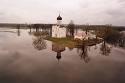 Once the winter snows have melted, Oryol can seem like a magical place. Afternoon boaters float idly along the Oka River as the glow of sunlight illuminates the golden domes of Orthodox churches about town. Couples and friends stroll along the blossom-lined riverbanks, and fill the parks and plazas until late in the evening, when red-and-yellow trams are still rattling through town.
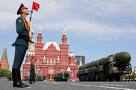 One of Russia’s gems, Novgorod is a beautiful town of solid old churches, peaceful tree-lined streets and a magnificent kremlin full of historic treasures. These attributes, coupled with the town’s friendly, laid-back residents and its access to lovely countryside, make Novgorod a highly rewarding destination.
 Walking around Pushkin’s inspiring estate at daybreak, it’s easy to see where Russia’s greatest poet received his inspiration. As you pass through the moist forest air, you soon reach the edge of a lake, offering magnificent views of tall, regal pines lining the far shore. A silvery mist rises off the smooth surface of the water as a lone fisherman casts his line out across the reeds.
Set along the Tuskar River, Kursk is a working-class city that’s seen more than its fair share of destruction over its 1000-year history. Much of the city has been rebuilt since WWII and stands as an unsightly monument to Soviet urban planning, c 1967. Its importance in WWII is well documented in its museums, and the pride of its stolid residents lives on. Aside from this – and a few attractive churches – Kursk doesn’t draw many visitors.
 Tall, windswept sand dunes and dense pine forests full of wildlife lie along this dramatic strip of land dividing the tranquil Curonian lagoon from the Baltic Sea. A paradise for both migratory birds and those interested in one of Russia’s most fascinating – and least visited – sites, the Kurshkaya Kosa is the Russian half of the narrow, 98km-long Curonian Spit. It’s a Unesco World Heritage Site, and a lovely place for exploring.
 In 1990 the Soviet authorities finally admitted that the NKVD (predecessor of the KGB) had shot more than 6000 Polish officers in the back of the head in the Katyn Forest near Smolensk in 1940. The bodies of the officers, who had been imprisoned by the Soviet occupying troops in Poland in 1939, were left in four mass graves.
 Overlooking the Baltic Sea, the Kaliningrad region boasts some striking scenery. Among the region’s attractions, you’ll find a vibrant city with 700 years of Prussian history, pleasant coastal towns facing the sea, and the wild Curonian spit, a narrow landmass lined with some of Europe’s highest sand dunes, deserted beaches and verdant marshland. You’ll also find a colourful array of wildlife hidden in the region’s thick forests.
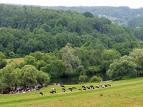 Old photos attest that until 1945 Königsberg was one of Europe’s finest-looking cities: regal, vibrant, cultured and an archi- tectural gem. But WWII, later Soviet destruction of German-era constructions and misguided building projects saw to it that today’s Kaliningrad is not exactly eye-candy.
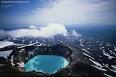 On a ridge with wide views over the countryside, Izborsk was once the equal of Pskov, chosen as a base by one of the original Varangian princes who ruled over early Russia. Now it’s a sleepy village by the ruins of the oldest stone fortress in Russia. Inside the old walls is the 14th-century Church of St Nicholas, a small green-trimmed building that was undergoing restoration at the time of research. There’s also a stone tower (Bashnya Lukovka), older than the walls, which has a viewing platform(R15; 10am-6pm) at the top. A path around the back of the fortress walls leads down to a lake. The locals you’ll pass toting water bottles are coming from the 12 Springs of Happiness, Love, Health and nine other virtues.