
In the evenings, when residents of Mompós rock calmly in their rocking chairs and the bats flutter through the eaves, you may feel like you’ve stepped into the pages of Huckleberry Finn or Gone With the Wind.
Categories
In the evenings, when residents of Mompós rock calmly in their rocking chairs and the bats flutter through the eaves, you may feel like you’ve stepped into the pages of Huckleberry Finn or Gone With the Wind.

Often overlooked by travelers rushing on to illa de Leyva, Tunja, the capital of Boyacá and a bustling student center, has plenty to offer the discerning tourist, with fine colonial architecture, an imposing central square and elegant mansions adorned with some of South America’s most unique artwork.

This is Colombia’s heartland. The region of deep gorges, fast-flowing rivers and soaring peaks was the first to be settled by the conquistadors, and a number of their colonial towns stand today. It’s also the revolutionary heart of the country: it was here that Simón Bolívar took on Spain in the decisive fight for Colombia’s independence.
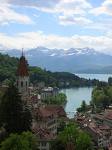
Villa de Leyva is where time stands still. Declared a national monument in 1954, the town has been preserved in its entirety and virtually no modern architecture exists. The result is a colonial town par excellence – a place where the streets are still cobbled and the walls still whitewashed. It’s easy to see the place in just a day, but many travelers find themselves caught in its magical grasp and hang on for several more.
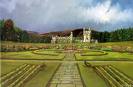
For the people of northwest Colombia, the Andes provide more than gorgeous views. Their rugged, emerald-green peaks divide the region into two distinct geographies, which in turn define the warp and weave of daily life.

With just the brew of altitude and precipitation, the terraced slopes of the Zona Cafetera yield nearly half of Colombia’s coffee crop on just over 1% of the country’s total area. The conjunction of agreeable temperatures, lush green valleys, and impressive snow-capped peaks make it perfectly adapted for curious travelers as well.
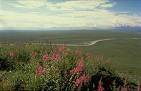
Spectacularly set in the deep Valle del Espíritu Santo in the Cordillera Oriental, colonial-era Pamplona is a delightful town of old churches, narrow streets and bustling commerce. If you’ve just come up from the hot plains of Venezuela, it makes for a nice stopover en route to central Colombia.

As you head southeast from the Andes, dry scrubland grows more lush, turning into almost impenetrable jungle long before you ever reach the Amazon. This huge, wild region, which Colombians call Amazonia, accounts for a third of the country’s total area – it’s about the size of California and larger than Germany. Biologists will probably never finish cataloging the region’s dizzying array of flora and fauna. Likewise, visitors can never quite account for the strange exhilaration they feel when they come face-to-face with the rainforest for the first time.

One of Colombia’s most popular national parks, Tayrona is set on the jungle-covered coast at the foot of the Sierra Nevada de Santa Marta. The park stretches along the coast from the Bahía de Taganga near Santa Marta to the mouth of the Río Piedras, 35km to the east.

Though not beautiful in itself, Armenia is set dramatically between a lush valley and one of the highest stretches of the Cordillera Central. Founded in 1889, the city quickly grew into the center for the region’s coffee trade, and in 1966 it became the capital of the newly created Quindío department. Unfortunately, disaster struck in 1999 when a catastrophic earthquake destroyed almost a third of the city center.