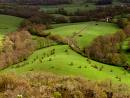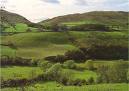
People generally assume that Southern Patagonia is the most desolate and pristine part of Chile. Try again. Aside from southern Tierra del Fuego, the narrow, fragmented lands of Northern Patagonia – Aisén and the Carretera Austral – are the least populated, least developed and least visited in Chile. Travelers tend to bypass this area on the mad dash to Torres del Paine, or don’t bother to venture beyond the comforts of the Lakes District. Northern Patagonia is, in fact, a spectacular region full of natural wonders, which attracts adventurous travelers and people in search of solitude.
Category: Chile
Santiago Chile

On a clear day, fresh after winter showers, Santiago basks in one of the most spectacular settings of any city in the world. A glance through the downtown blocks reveals a mighty circle of mountains – the snowcapped Andean peaks to the east, and a smaller coastal range to the west – that frames the Chilean capital.

An emerald umbrella on the rainy bay, the yawning outpost of Chaitén is little more than a six by eight grid of wide streets. The only town near Parque Pumalín, it’s also a major transport stop for the ultrarural Carretera Austral. If you arrive by ferry; the port is a 10-minute walk northwest of town. Around the plaza are the post office, Entel and Banco del Estado (cnr Libertad & O’Higgins), which exchanges cash at poor rates and has an ATM. The tourist kiosk (cnr Costanera & O’Higgins; 9am-9pm Jan-Feb) lists lodgings. Pumalín Information Center (O’Higgins 62) has park information and reserves cabins. A bastion of local information, Chaitur (731-429; [email protected]; O’Higgins 67) organizes excursions with bilingual guides to Pumalín, the Yelcho glacier, Termas de Amarillo and beaches with sea-lion colonies. Regional buses are based here and the agency also can provide general tour assistance, in English as well.
The-Lakes-District Osorno Chile

Not to be confused with the stunning (and relatively far-off) Volcán Osorno, Osorno ‘the city’ is a bustling place and the commercial engine for the surrounding agricultural zone. It is hard to find anyone with anything particularly positive to say about Osorno, other than it is a good place to work. It is also an important transportation hub on the route between Puerto Montt and Santiago. To give it a bit more credit, Osorno seems to turn out some friendly folks who are a bit more worldly than their small-town brethren.
Southern-Patagonia Chile

Mysterious, storied Patagonia may claim the lower third of Chile, but the heart and the ethos of the region lie in the southern states of Magallanes (Magellan), Última Esperanza (Last Hope) and Tierra del Fuego (The Land of Fire). Along with the deep Amazon and a few stretches of Alaska, this area at the bottom of the Americas is the final frontier of the New World. It is here that you will find the imposing rocky spires of Torres del Paine, islands inhabited only by penguin colonies, hard livin’ gauchos, and the raw landscapes and remote towns that attracted the likes of Butch Cassidy and the Sundance Kid.
Middle-Chile Chillan Chile

Earthquakes have battered Chillán throughout its turbulent history, so most of its colonial charm was bulldozed away decades ago. But, away from the sweeping concrete shopping precincts of the city center, it does have its appeal. As the birthplace of Chilean liberator Bernardo O’Higgins, the city boasts an interesting history, as well as a bustling, colorful outdoor market, one of Chile’s best. Founded in 1565 as a military outpost, it marked the northern border of La Frontera, an area over which the state never exercised complete control until the Mapuche were subdued in the late 19th century. Destroyed by earthquakes and Mapuche sieges, Chillán was refounded several times before moving to its present site in 1835. However, the old city, nearby Chillán Viejo, never really died.
Northern-Chile Ovalle Chile

This unassuming market town is more famous for its surrounding attractions than its own modest charms, which include an artifact-heavy museum and an animated plaza where men huddle over chess games and stalls peddle colorful trinkets. Founded as a satellite of La Serena in early republican times, Ovalle is the capital of the prosperous agricultural province of Limarí; so it’s unsurprising that it also has the liveliest market, Ferio Modelo de Ovalle, in the region.
Middle-Chile Talca Chile

Talca folk are fond of repeating a phrase coined in their town, Talca, Paris y Londres. While that slightly over-hypes the Chilean city, this is a worthwhile place to visit. It has thriving universities, so there is a lot going on during term-time. But this is also wine country, and nearby viticulturists are now catering to a steady stream of booze- and food-loving gringos. Talca is also of historical as well as culinary significance – Chile’s 1818 declaration of independence was signed here. Beyond the city boundaries, there are some breathtaking under-explored trekking possibilities in the nearby Reserva Nacional Altos de Lircay.
Chiloe Chile

Visitors who lament the supposed cultural homogeneity of Chile, or consider it too similar to their own country, obviously haven’t been to the misty, verdant archipelago of Chiloé. This group of islands evolved independently from the rest of the country and escaped much of the conforming influence of Santiago and the colonial onslaught. It then remained isolated and off the commercial route until nearby Puerto Montt was founded in the mid-19th century. Chiloé sprouted its own history and culture, unique to the islands, and is worthy of a visit for its striking regional flavor.
Chiloe Parque-Nacional-Chiloe Chile

Running back from the pounding Pacific coastline, and over extensive stands of native evergreen forest, the 43, 000-hectare Parque Nacional Chiloé (adult/child US$2/free) is only 30km west of Chonchi and 54km west of Castro. The park teems with Chilote wildlife, from 110 different types of bird, to foxes and the reclusive pudú, which inhabits the shadowy forests of the contorted tepú tree. Within the park and along the eastern perimeter is a number of Huilliche indigenous communities, some of which are involved with the management of campsites within the park.