
Life’s a beach. Certainly that’s true in sunny Santa Catarina, which boasts 560km of spectacular coastline.
Categories
Life’s a beach. Certainly that’s true in sunny Santa Catarina, which boasts 560km of spectacular coastline.
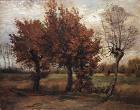
The Amazon may attract more fame and glory, but the Pantanal is a better place to see wildlife. In the Amazon, the animals hide in the dense foliage, but in the open spaces of the Pantanal, wildlife is visible to the most casual observer. If you like to see animals in their natural environment, the Pantanal – with the greatest concentration of fauna in the New World – should not be missed.

The small fishing village of Algodoal on Ilha de Maiandeua, 180km northeast of Belém, attracts younger Belenenses and a few foreign travelers. It’s an attractive natural retreat with hard, windswept beaches and a sometimes turbulent sea.

Built up around sand dunes and beaches, with plenty of fresh breezes, Cabo Frio’s naturally gorgeous settings have been stunted by the salt and tourism industries that dominate in the area. If you are able to overlook the encroaching overdevelopment, Cabo Frio remains a relaxed little beach town, ready to greet newcomers with a smile. Every weekend, and throughout the summer holidays, it attracts scores of visitors – the bars are invariably filled with happy-go-lucky Brazilians whooping it up, and the merrymaking spirit is clearly Cabo Frio’s strongest attraction.
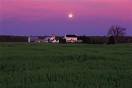
This low-key town on the Rio Mamoré came into existence as the southern terminus of the Madeira–Mamoré Railway. Both Guajará-Mirim and Bolivian Guayaramerín across the river are free-trade zones with a steady stream of shopping tourists.

While Joinville does not have the historic center (or the beer festival) of Blumenau, it does have decidedly German roots. They are evident in the city’s nouveau-Alpine architecture and in the well-manicured lawns and litter-free parks around town. The economy thrives on metallurgy, plastics and information technology, but this industrial activity is tucked neatly away from the eyes of visitors. The result is a big city with the good manners of a small town. Joinville’s citizens are proud of their prosperous, orderly home, and they welcome visitors with warm hospitality and a surplus of helpful information.

It is thought that the name of Brazil’s first marine park comes from a sailor’s warning: when approaching land, open your eyes (abre os olhos). Abrolhos covers an area of 913 sq km, including reefs noted for the variety of colors and a five-island archipelago that Charles Darwin, aboard the HMS Beagle, visited in 1832. These days the primary residents of the archipelago are migrating birds and humpback whales (June to October), which come here to rest and give birth. Only the Ilha de Santa Bárbara has a handful of buildings, including a lighthouse built in 1861. The preservation of the islands is important to IBAMA (Instituto Brasileiro do Meio Ambiente e dos Recursos Naturais Renováveis; Brazilian Institute of the Environment and Renewable Natural Resources), so visitor land access is limited to daytime hours on only the Ilha da Siriba. But you didn’t come to a marine park for land; you came to snorkel and dive in crystal-clear waters, the visibility of which can reach 20m in the dry season (May to September).
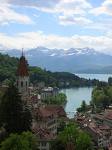
Santa Elena is dusty town a few kilometers north of the only land-border crossing between Brazil and Venezuela. It’s higher and cooler than Boa Vista, and provides access to Venezuela’s vast and beautiful Gran Sabana. The region is dotted with waterfalls and curious flat-topped mountains called tepuis; the largest and most famous tepui is Mt Roraima, a spectacular natural monument and the spot where Brazil, Venezuela and Guyana meet.

Spectacular white-sand beaches, pristine subtropical islands and the thunderous roar of the Iguaçu waterfalls are a few of the attractions of Brazil’s affluent south. There’s also great whale-watching, surfing and a fascinating train journey over the mountains. While often given short shrift by first-time visitors, this region offers a radically different version of what it means to be Brazilian. Here gauchos still cling to the cowboy lifestyle on the wide plains bordering Argentina and Uruguay, and the influence from millions of German, Italian, Swiss and Eastern European settlers is evident in the Old World feel of inland and coastal villages (not to mention the blond hair and blue eyes).

Alter do Chão, 33km west of Santarém, is justly the subject of a thousand postcards. A sandbar directly in front of the town forms a picturesque white-sand island, known as Ilha do Amor (Island of Love). The island is largest and most attractive when the water is low, usually June to December. In the wet season it’s greatly reduced, though still pretty.