 Geyzing is West Sikkim’s capital, but for permit extensions you need Tikjuk, half way to Pelling.
Author: WorldTravelDB.com
Categories
Geyzing Gyashaling Sikkim India Travel
 Apart from its vaguely interesting Sunday market, Geyzing is most useful as West Sikkim’s transport hub. However, for a pleasantly peaceful accommodation alternative, go 2.3km towards Sakyong (itself a village with considerable potential). Here the Tashigang Resort (250340; www.tashigangresort.com; s Rs 900-1300, d Rs 1150-1560, plus tax 20%) offers magnificently wide views from almost all except the cheapest ‘deluxe rooms’. Curious roof lawns top the slightly frumpy red-brick building offering more chances for mountain contemplation.
 Gaya is a raucous, dusty town about 100km south of Patna. Although it’s a centre for Hindu pilgrims, it’s really only of interest to travellers as the transport hub for Bodhgaya, 13km away. Pilgrims come here to offer pinda (funeral cake) at the ghats along the river, and perform a lengthy circuit of the holy places around Gaya to free their ancestors from bondage to the earth.
Categories
Ganpatipule Maharashtra India Travel
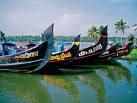 Ganpatipule, on the coast 375km south of Mumbai, has several kilometres of almost perfect beaches and clean waters that leave those of Goa for dead. For much of the year life plods along very slowly but woe betide anyone coming here for a bit of peace and quiet during the Indian holidays (Diwali is especially busy). These tourists haven’t come for the hedonism of sun and sand though, but rather for the town’s seaside temple (235223; 5am-9pm) with its Swayambhu Ganpati, or ‘naturally formed’ monolithic Ganesh (painted a lurid orange), allegedly discovered 1600 years ago.
Categories
Gangtok To Pelling Sikkim India Travel
 There are three main routes from the capital to Sikkim’s main tourist hub. The longest and least interesting loops a long way south to Rongphu, then back via Melli, Jorethang and Legship. Fortunately this is normally only used by public sumos when landslides block the two possible routes via Singtam and Ravangla. Both of these are highly attractive, especially the longer, little-used route via Yangang (hired jeep only), which approaches Ravangla along an extremely dramatic cliff-edge drive around the precipitous base of Maenam Hill.
Categories
Gangtok Sikkim India Travel
 Sikkim’s capital is mostly a functional sprawl of multistorey concrete boxes. But true to its name (meaning ‘hill top’) these are steeply layered along a sharp mountain ridge. When clouds clear (typically at dawn), views are inspiring, with Khangchendzonga poking its pointy white nose above the western horizon. Gangtok’s manmade attractions are minor, but it’s not a bad place to wait out a day or two while organising trekking permits or trips to the north.
Categories
Gandhinagar Gujarat India Travel
 Gandhinagar forms a striking contrast to Ahmedabad, with big broad avenues and lots of greenery. This is where state politicians live, in large, well-fortified houses. Although Ahmedabad became the capital of Gujarat when the old state of Mumbai was split, this new capital was planned 32km northeast on the west bank of the Sabarmati River. Named Gandhinagar after Mahatma Gandhi, it’s India’s second planned city after Chandigarh. The secretariat was moved here in 1970.
Categories
Fort Aguada And Candolim Goa India Travel
 The beaches of Candolim and Sinquerim (below Fort Aguada) are popular with charter and upmarket tourists. The pace is a little less frenetic than at Calangute and Baga up the coast. Independent travellers are rare here, most of the hotels being favoured by package-tour operations. The beach at Fort Aguada is notable for its rocky and attractive headland, while Candolim has the rusting hulk of a grounded tanker, the River Princess – it’s not a very pretty princess. Some of the best-value beach accommodation in Goa lines the quiet back lanes of both villages.
 This magnificent fortified ghost city, 40km west of Agra, was the short-lived capital of the Mughal empire between 1571 and 1585, during the reign of Emperor Akbar. Akbar visited Sikri to consult the Sufi saint Shaikh Salim Chisti, who predicted the birth of an heir to the Mughal throne. When the prophecy came true, Akbar built his new capital here. Although a brilliant Indo-Islamic masterpiece, the city was erected in an area that suffered from water shortages and was abandoned shortly after Akbar’s death. The well-preserved palace buildings and the still-used mosque are a superb reminder of the Mughals at their architectural peak, and you can wander around other ruins scattered behind the mosque and the mint.
 The chaotic central UP town of Faizabad, once the capital of Avadh, is primarily a base and jumping-off point for the auspicious Hindu and Jain religious centre of Ayodhya, 7km to the east. Being the birthplace of Rama, Ayodhya is one of Hinduism’s seven holy cities, but it is also where five Jain tirthankars (holy men) were born. The Atharvaveda described Ayodhya as ‘a city built by gods and being as prosperous as paradise itself’, but today it’s just a dusty pilgrimage town full of temples and monkeys.