 The sound you hear in Catbalogan is silence, at least compared to most tricycle-clogged towns. Only pedal power is allowed in the centre, which added to the fact that Catbalogan has the best choice of accommodation on the island, makes it the most logical place to base yourself if you intend to explore the interior. There’s an impressive looking city hall. Catbalogan is the provincial capital of western Samar, and in the middle of Pita Park, a little patch of greenery not far from the port, there is a memorial to the Doña Paz ferry disaster. Most of the victims were from Catbalogan and elsewhere on Samar.
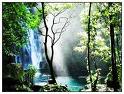
But the real reason to visit Catbalogan is in order to get out of it, to venture out to the gorges, deep ravines, lush forest, caves and subterranean rivers to the north and east. Nearby are the waterfalls of Pinipsakan, Bungliw, Bangon, Mawacat and Larik, the Guinogo-an cave system, and Mapaso Hot Springs (where, remarkably, small red crustaceans called pokot survive in the scalding water). The Calbiga Cave, the Philippines’ biggest karst formation and at 2970 hectares, one of the largest in Asia, is an adventurer’s playground. It was only first systematically explored in 1987 by an eight-person team of Italian speleologists, and the main cave, Langun, has a chamber the size of three football fields. All these attractions are between one and two hours’ drive, plus between 15 and 40 minutes’ walk, from the city.
View some related video clips below.
We uses YouTube API Services. https://www.worldtraveldb.com/youtubes-terms-of-service/
[tubepress mode=’tag’, tagValue=’Catbalogan Philippines travel’]